
The Life You Didn't Choose
The Comfort Trap · Part 3

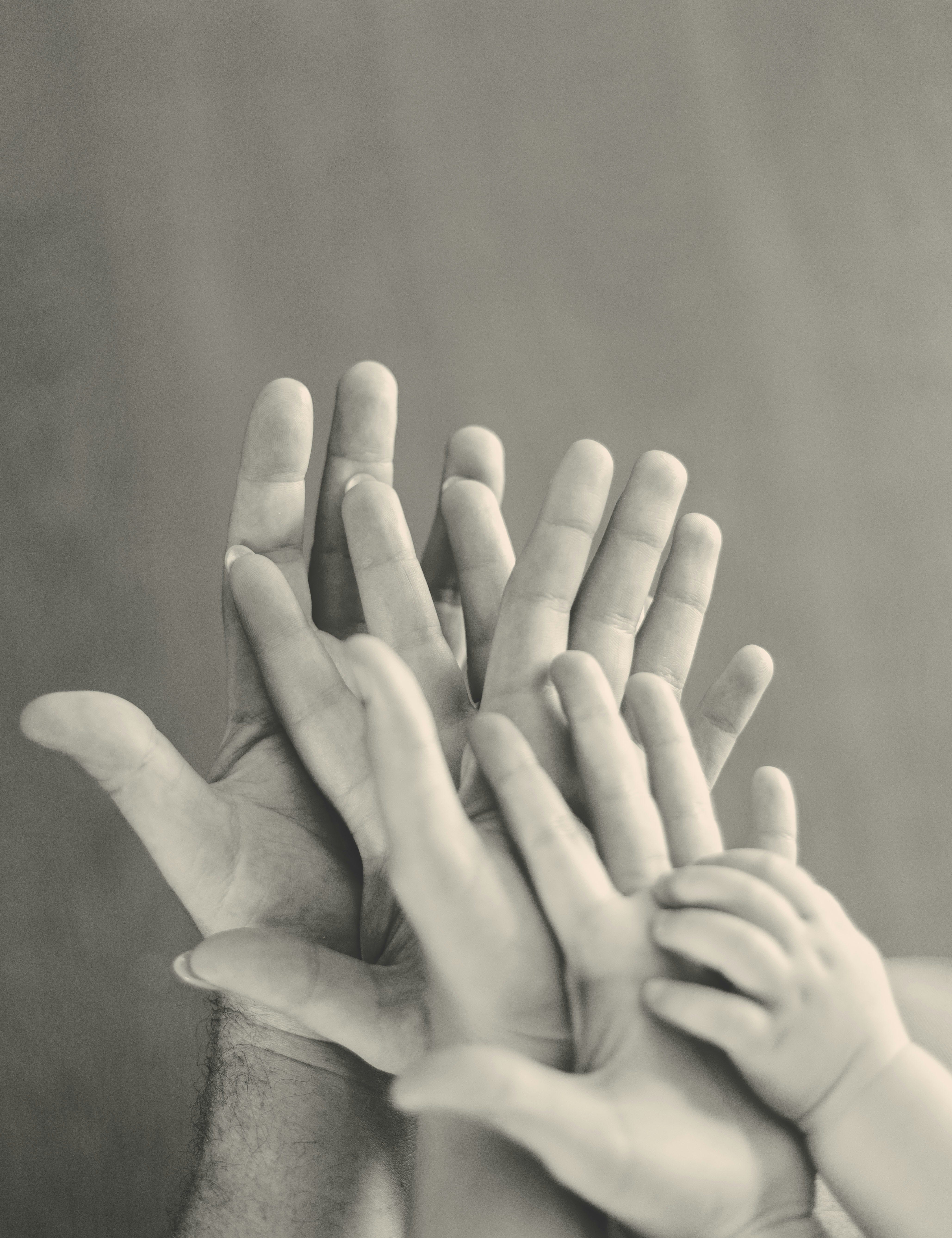
Something is happening in the Western world that demographers track in numbers but rarely name for what it is.
Birth rates are falling below replacement level across Europe, North America, Australia, and increasingly East Asia. In some countries they have been below replacement for decades. Governments have tried financial incentives, parental leave extensions, public campaigns. None have meaningfully reversed the trend.
The explanations offered are mostly economic. Housing costs, education debt, the price of raising a child in a world that has decided children require continuous optimization to compete. All of this is real. None of it is the whole story.
The whole story is about friction.
What a Child Actually Is
A child is not a project. Not an extension of the parent’s identity. Not a vehicle for meaning or legacy or proof that a life was lived well.
A child is a separate human being who arrives with their own assignment and who will spend the first years of that assignment entirely dependent on you for survival, without your permission, without regard for your schedule, your sleep, your sense of self, or your life plans.
This is not a failure of planning. It is the design.
The friction of a child is not a cost to be minimized. It is the curriculum.
The parent who cannot sleep because the infant is crying is learning something about the limits of control that no other experience teaches so reliably. The parent who watches a teenager choose badly and can only witness not fix is encountering the boundary of their sphere of influence at exactly the depth where it matters most. The parent who loses the thread of who they were before the child arrived, and then finds something different on the other side, has undergone something that comfort cannot produce.
Kahlil Gibran named it directly: “Your children are not your children. They are the sons and daughters of Life’s longing for itself. They come through you but not from you.”
The bow bends. The arrow flies. The archer’s work is on themselves not on controlling the trajectory after the arrow has left.
Knowing this intellectually changes nothing. The grip runs automatically: the child as extension of the parent’s needs, as proof of success, as the place where unresolved patterns find their next generation to inhabit. Embodying “not ours” requires exactly the same instrument as everything else in this series. It is not a thought. It is a developed capacity.
The Birth Crisis Is Not an Economic Problem
It is true that having a child in the contemporary Western world is expensive. Housing, education, childcare, the loss of income during the early years these are real costs that fall disproportionately on people who are already navigating housing, debt, and economic instability.
But birth rates have fallen in countries with generous parental leave, subsidized childcare, and housing that is still affordable. They have fallen among people with high incomes as much as low ones. The economic explanation fits some of the data. It does not fit all of it.
What fits all of it is the shift in what contemporary life has optimized for.
A life organized around individual comfort, freedom from constraint, and the continuous expansion of personal options is structurally incompatible with the particular demands of early parenthood. A child does not negotiate. A child does not wait until you are ready. A child does not respect the boundaries of your carefully maintained sense of self.
The modern project has been removing friction from every domain it can reach. Food has been engineered to deliver reward without effort. Connection has been replaced by screens that provide stimulation without the discomfort of genuine relationship. Work has been made more comfortable, more flexible, more optimized for individual preference.
Children have not been made more comfortable. They are exactly as demanding as they have always been.
And that is the problem.
Not the cost. The friction.
The Substitute
The same generation that is having fewer children is having more pets.
Pet ownership has risen sharply across the same decades that birth rates have fallen. The language used has shifted accordingly “fur babies,” “pet parents,” “our dog is our child.” This is not a coincidence or a quirk of language. It is the same signal being answered with a different substitution.
The need for deep attachment, for something to care for and be needed by, for the particular aliveness that comes from genuine responsibility for another being this signal doesn’t disappear because having a child has become expensive and demanding.
It finds the nearest available object that provides some of the reward with less of the friction.
A pet requires care. It returns affection. It creates the experience of being needed without the eighteen-year constraint on personal freedom. The signal is partially answered. The deeper need for the particular developmental friction that only certain relationships can provide is not.
This is not a criticism of people who have pets. It is an observation about the mechanism. The pattern across the Comfort Trap series is consistent: when the genuine signal cannot be met because the cost feels too high, a substitution arrives that provides the immediate reward while the deeper capacity slowly degrades.
What Gets Transmitted
The research on what children actually receive from parents has moved far beyond what parents say and do.
Epigenetics has shown that the parent’s physiological state at conception and in the early months influences gene expression in the child patterns of stress regulation, metabolic function, immune response before any conscious parenting choice has been made. What the parent carries in their body is transmitted at a layer that precedes language, intention, or awareness.
Attachment research has confirmed the same from the developmental side. The child’s fundamental orientation toward the world whether it is safe or threatening, whether relationships are trustworthy or dangerous is shaped in the first months of life through the quality of attunement with the primary caregiver. This attunement is not about technique. It is about the parent’s own capacity to be present, regulated, and genuinely available. A parent running on chronic depletion, unresolved anxiety, or the low-grade dissociation of a life spent managing screens transmits that state at the pre-verbal layer where the child’s nervous system is forming.
This is why the Comfort Trap is not only a personal problem. It is an intergenerational one.
The degraded instrument doesn’t only affect the person who carries it. It shapes the nervous system of the child who receives care from that person before either of them knows it is happening.
The Friction Is the Curriculum
Every domain this series has examined loneliness, hunger, now the question of having and raising children points at the same mechanism.
The modern project removed friction where it could. Each removal felt like progress. Less loneliness through connection at scale. Less hunger through food engineered to satisfy. Less constraint through a life optimized for individual freedom.
The friction that was removed was not an obstacle. It was the mechanism through which the capacity developed.
The social friction of genuine relationship the discomfort of being truly seen, the risk of genuine rejection, the work of repair after conflict develops the capacity for real connection. Remove it and the capacity degrades. The loneliness that doesn’t feel like loneliness is the result.
The friction of genuine hunger the body’s signal completing its message before a substitution arrives develops the capacity to read what the body actually needs. Engineer it away and the instrument loses its calibration. The hunger that doesn’t feel like hunger follows.
The friction of a child the loss of sleep, the loss of control, the confrontation with your own unresolved patterns in someone else’s face, the requirement to be genuinely present rather than optimized develops something in a person that comfort cannot reach.
A civilization that has systematically removed friction has made itself more comfortable. It has also made itself less capable of the development that friction was producing.
What Remains
This is not an argument for having children. It is not a judgment of people who have made different choices, or who have had those choices made for them by circumstances.
It is an observation about what happens when the signal that a particular kind of friction is needed gets answered with a substitution, generation after generation, at scale.
The capacity that was being developed through the friction doesn’t disappear immediately. It degrades gradually. The degradation is not visible until the moment when the capacity is needed and is not there.
The instrument that reads what is actually working the pre-cognitive signal that the Comfort Trap series has been mapping from different angles is developed through contact with what is real, demanding, and not optimized for your comfort.
Children are one of the most reliable sources of that contact that human civilization has ever produced.
Which is why the civilization that is learning to live without them is learning something about itself that it may not yet be able to read.
Developing this capacity in a structured way is what the work at AwareLife is about. If this article pointed at something you want to explore further, reach out directly at info@awarelife.co.il or through a Substack message.
What has the friction in your life been developing in you that you have not named yet?
In the next article in this series: taking care of aging parents is the best spiritual growth opportunity the West has left behind, and why modern life has made it almost impossible to see that.
This is an interesting essay because it identifies something important but, I think, stops one level too early.
I agree that children introduce friction. They expose our impatience, our need for control, our unresolved fears and our capacity for love. Parenthood undoubtedly changes adults.
But I don't think that is the deeper developmental story.
The article quotes Gibran's famous line that children are "living arrows" and parents are merely "bows." It is a beautiful metaphor, but it is doing an extraordinary amount of work while explaining very little.
Who shaped the bow?
Who made the arrow?
Who decided what counts as a good target?
An arrow is passive. Once released it simply follows its trajectory. Human beings are not arrows. They are developmental systems that continuously learn, adapt, revise and reshape themselves throughout life.
Nor are children simply launched into the world. They are born into societies that already define, implicitly or explicitly, what competence, responsibility, success and adulthood look like. Parents do not raise children in isolation. They are one part of a developmental ecology that includes family, teachers, peers, institutions, culture and the wider environment.
The article also speaks of epigenetics as though parents primarily transmit themselves to their children. I think that is only a small part of a much larger picture.
The more interesting question is not what parents transmit, but how developmental environments progressively canalise the child.
Every child arrives with a unique polygenic architecture. That architecture is neither destiny nor infinitely plastic. It develops through thousands of recursive interactions with the world. Manageable challenge followed by successful adaptation. Curiosity followed by competence. Stress followed by recovery. These repeated cycles progressively stabilise ways of perceiving, regulating, reflecting and acting.
In other words, the adult is not principally created by the friction of raising children.
The adult is largely created by the developmental landscape they survived as a child.
Perhaps that is why I see the direction differently. Give the child, and you largely give the adult. The real question, therefore, is not simply whether modern adults avoid friction. It is what kinds of developmental environments we are collectively constructing for children, because today's childhood becomes tomorrow's civilisation.
Friction alone is not the curriculum. War contains friction. Neglect contains friction. Poverty contains friction. Chronic stress contains friction.
What matters is developmentally appropriate challenge held within safety, relationship and recovery.
That is what builds adults capable of deciding for themselves what constitutes a good life.
It's not the friction that prevents me from having a child. I think I would be a good mother. It's the why behind it all. I don't know why I would have a child. Especially in this society.