
The Boredom Paradox: The Moment That Was Never Old
A glitch, substituted by comfort before it's ever felt.

A note on how this is written: AI assists with research and editing here, the way any tool assists a craftsman. The judgment, the argument, and the responsibility for what’s said remain entirely mine.
Four hundred years ago, Pascal wrote that all of humanity’s problems come from one thing: the inability to sit quietly in a room alone.
He meant this as a diagnosis, not an exaggeration. What happens when you have nothing to do? No task, no phone, no book?
It doesn’t take long. Within minutes, something in you starts looking for a way out.
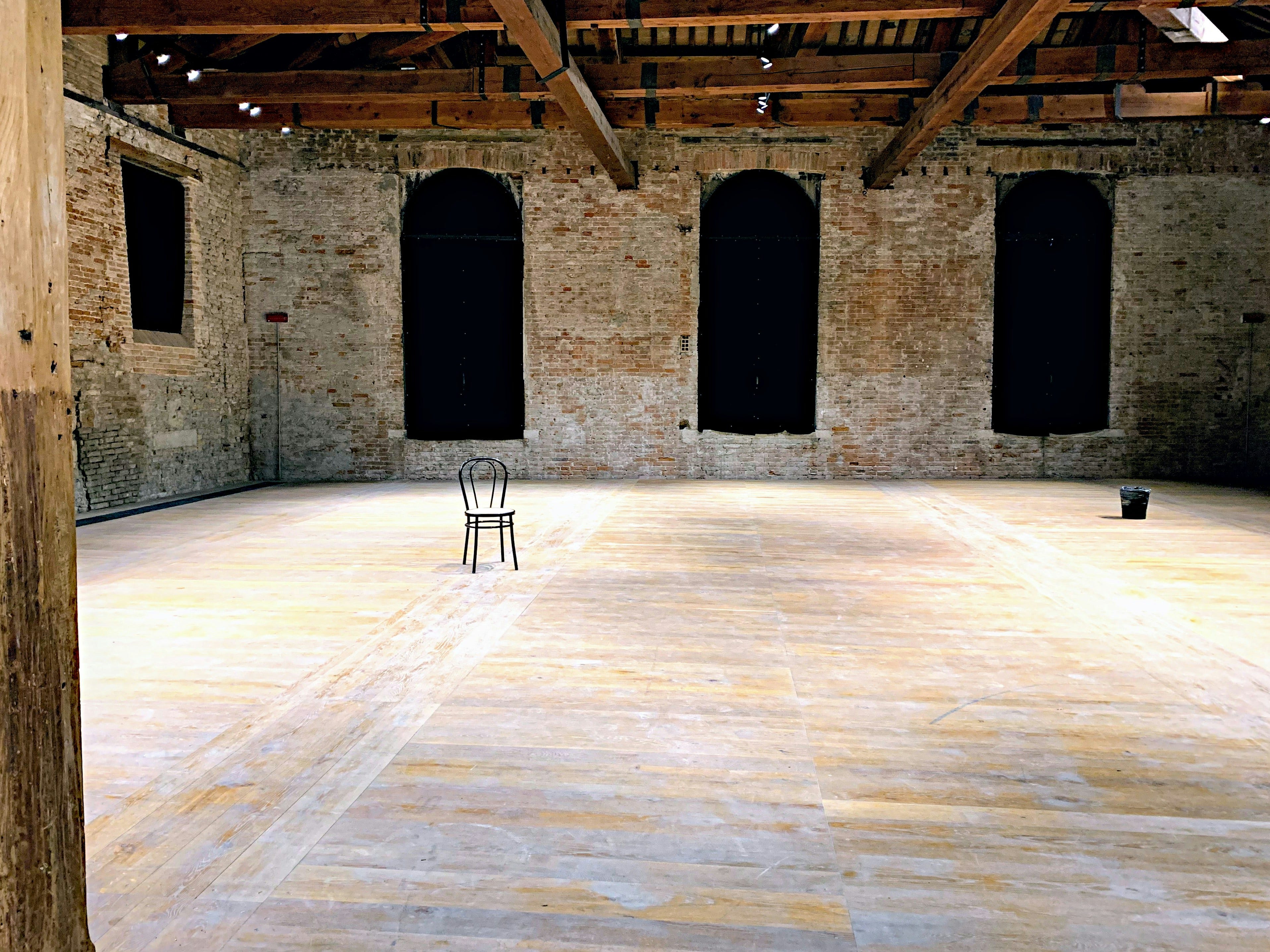
Psychologist Timothy Wilson tested this directly in 2014. He left people alone in a bare room for up to fifteen minutes, with nothing but their own thoughts. Most did not enjoy it. In one version of the experiment, participants were given a button that would deliver a mild electric shock, the same shock they had already said they would pay money to avoid. Left alone with nothing else to do, 67 percent of the men and 25 percent of the women shocked themselves anyway, rather than sit there empty handed.
Why? Nothing was happening in it.
But is that actually true? Let’s look closer.
What “nothing happening” really means
Light was changing in that room. Sounds were arriving from outside. A body sitting there was doing a thousand small things a body always does. Reality never actually stops. Something was always happening there.
So what was actually missing?
Nothing in the room was new to the part of the mind that decides what deserves attention. The walls, the chair, the silence, all of it matched what the mind already expected before it even looked.
What does a mind call something it already expects to find?
Boredom.
Neuroscientist Wolfram Schultz mapped the mechanism behind this decades ago, studying how the brain’s dopamine system responds to reward. The brain doesn’t respond to the reward itself. It responds to the gap between what it expected and what actually arrives, what researchers call prediction error. Close that gap to zero, and the signal that produces engagement simply doesn’t fire.
Boredom, in this frame, is what it feels like when everything arrives exactly as expected. New known equals old known.
What Wins Where the Room Lost
B.F. Skinner found the other half of this decades earlier, studying operant conditioning. Of all the ways to reinforce a behavior, an unpredictable reward produces the most persistent behavior there is, more persistent than a reward that comes every time, more persistent than one that never comes. Not knowing when the next reward arrives is exactly what keeps a hand moving.
This is why a slot machine is built the way it is. It’s also why a feed is built the way it is. But it doesn’t stop there. A movie withholds its ending. A concert withholds which song comes next, or whether there’s an encore at all. A show holds back what happens to the character you followed all season. Nearly everything built for entertainment runs on the same principle: never let the next moment be fully known in advance.
The empty room closed that gap completely. Everything else, the phone, the film, the stage, exists to keep reopening it.
Is your phone competing with reality by being more interesting than it? Not quite, and neither is anything else built for entertainment. It competes by staying one step ahead of your prediction, deliberately, by design. That’s the one place your categorizing mind can’t get ahead of what comes next.
Deciding Before You Look
Psychologist Arie Kruglanski spent decades studying what he calls the need for cognitive closure, a measurable pull toward a firm answer and away from anything ambiguous. This pull is stronger in some people than others, and stronger in some situations than others.
Push it far enough, and the mind decides before it looks:
The room is “nothing.”
The meeting is “boring.”
The routine is “already known.”
None of these were ever actually inspected. The mind decided first, and looked second, if it looked at all.
This is the trade the mind makes. It gets speed. It gives up contact with the thing in front of it.
The Way Back In
Harvard psychologist Ellen Langer spent her career studying this same closure, and what interrupts it. Her work describes mindfulness not as stillness, but as a refusal: refusing to let a category close before you’ve actually looked at the thing itself.
A 2025 study by Alyssa Torske and colleagues at the Technical University of Munich put this to a direct test. Participants ate the same food again and again, the kind of repetition that normally produces total habituation, where the tenth bite registers as nothing at all. But the group trained to attend closely to each bite didn’t habituate the same way. The food kept registering as something, bite after bite. Nothing about the food itself had changed. What changed was whether their minds decided it was already known before they tasted it.
So does the room need new content? No. It needs to not be closed before it’s opened. What happens if your attention goes to what is actually there, instead of what you expected to find? The exact gap boredom needs closed reopens.
This isn’t a trick for entertaining yourself without a phone. It’s a different relationship to the moment itself. Not gathering more information about it. Not looking for what’s interesting about it. Meeting it before deciding what it is.
Every moment that has ever bored you was, underneath the boredom, a moment that had never happened before. It only looked known because you never felt it.
This is the same trade the Comfort Trap series kept finding in other places. Something gets removed because removing it feels like progress. What it was quietly producing doesn’t disappear, it just goes unbuilt, and it gets delivered back to you later, on worse terms. There, it was connection, hunger, the friction of raising children. Here, it’s your own felt capacity to meet an undefined moment at all. The debt still accumulates. It just shows up as boredom instead of loneliness.
What does this have in common with a battery? Meeting a moment directly charges something in you. Filing a moment as already known spends something, and gives nothing back. Check for it, and you can feel the difference in your body: one leaves you a little more awake, the other leaves you a little more drained.
A question, not a technique
The next time boredom shows up, before your hand reaches for the phone, what’s available first? Something smaller. Feeling this moment as it actually is. Not the label already attached to it. Not what you expect to find there. The moment itself, which has never existed until right now.
This capacity, meeting a moment before deciding what it is, is one of four principles the AwareLife framework traces through daily life. Three ways to develop presence: What’s Working
New to AwareLife? Start Here